
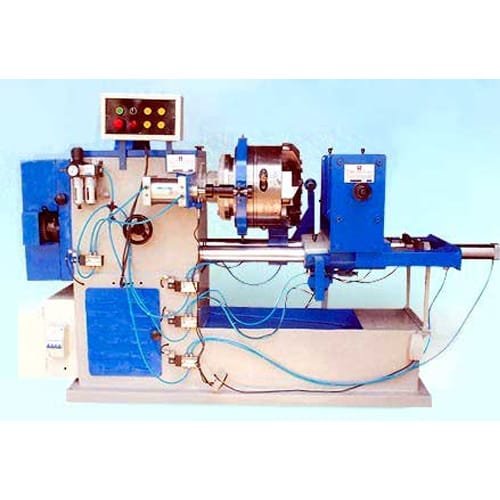
Technical engineering guide on tangential vs radial chaser die heads, cutting speed calculations (RPM vs pipe OD), lead screw synchronization, and coolant ratios for heavy pipe threading.
Threading steel pipe in high-volume production workshops requires a completely different approach than job-shop threading on manual center lathes. Whether threading scaffolding tie pipes, fire sprinkler mains, conduit pipes, or deep casing tubes, operators must achieve consistent thread taper (1:16 for NPT/BSPT), clean thread roots without tearing, and long tooling life between regrinds.
This technical manual examines the engineering principles behind heavy-duty pipe threading machine selection, chaser die head geometry, spindle speed optimization, and cutting fluid management.
Tangential Chaser Die Heads vs Radial Coventry Heads
The heart of any production pipe threading machine is the die head. Workshop buyers frequently evaluate two competing die head systems:
| Engineering Metric | Radial Die Head (Coventry Type) | Tangential Chaser Die Head (NCT Heavy Type) |
|---|---|---|
| Chaser Mounting Angle | Perpendicular to pipe surface | Tangential to the circumference (absorbs heavy cutting force) |
| Regrind Potential | Limited (3 to 5 regrinds before discarding) | High (can be reground 40 to 60 times along full length) |
| Heavy Wall / Seamless Pipe Duty | High risk of chaser breakage under heavy cuts | Exceptional rigidity, cuts schedule 80 seamlessly |
| Tooling Cost per 1,000 Threads | High consumable replacement cost | Lowest operational tooling cost in the industry |
Spindle Speed & Gear Selection Chart
Cutting steel pipe threads at excessive surface speeds burns chaser tooth tips, while running too slow causes thread root galling and poor finish. The chart below provides recommended spindle speeds for mild steel (Grade IS 2062 / ASTM A53) on National Cutting Tools Pipe Threading Machine lines:
| Nominal Pipe Bore | Outer Diameter (mm) | Thread Pitch | Recommended Spindle RPM |
|---|---|---|---|
| 1/2" (15 mm) | 21.3 mm | 14 TPI BSPT / NPT | 55 to 68 RPM |
| 1" (25 mm) | 33.7 mm | 11 TPI BSPT / NPT | 40 to 50 RPM |
| 2" (50 mm) | 60.3 mm | 11 TPI BSPT / NPT | 25 to 32 RPM |
| 3" (80 mm) | 88.9 mm | 11 TPI BSPT / NPT | 16 to 22 RPM |
| 4" (100 mm) | 114.3 mm | 11 TPI BSPT / NPT | 10 to 14 RPM |
Coolant Mixture & Lubrication Protocol
Never run production pipe threading dry or with plain water. Maintain a 1:10 ratio of water-soluble neat cutting oil with extreme-pressure (EP) additives. A steady flow of 15 to 25 liters/minute directed straight into the die head throat flushes chips out of the chaser teeth and keeps the cutting edge below 120°C, extending chaser sharpness by up to 300%.
To inspect running pipe threading machines or request custom tangential die sets for API or BSP threads, contact our Ludhiana works at +91-9888210800.
Machines covered in this guide
Senior Machine Tool Design & Production Engineering Division, Ludhiana Works
Authored by machine tool builders at our Ludhiana manufacturing works. Every technical parameter, metallurgy guideline, electrical formula, and production cycle stated in this guide is reviewed by our shop-floor engineers who assemble, wire, and execute material trials before global dispatch to GCC and domestic manufacturing facilities.
Need Engineering Consultation on This Subject?
Speak directly with National Cutting Tools senior machinery engineers.