
A technical civil engineering guide on mechanical rebar splicing. Details rebar rib peeling, cold thread rolling, cold forging upsetting, coupler tensile failure modes, and compliance with ASTM A615 Grade 60/75 and BS 4449 B500B standards.
Mechanical Rebar Splicing in Modern High-Rise and Infrastructure Projects
In high-rise commercial structures, bridge piers, metro rail viaducts, and LNG tank containment foundations, traditional rebar lap splicing creates severe rebar congestion, increases crane tonnage requirements, and consumes up to 15% to 20% redundant rebar tonnage in lap lengths. Structural design codes (including ACI 318, Eurocode 2, BS 8110, and IS 16172) mandate or recommend Type 2 mechanical rebar couplers to ensure structural continuity and bar ductility during seismic events.
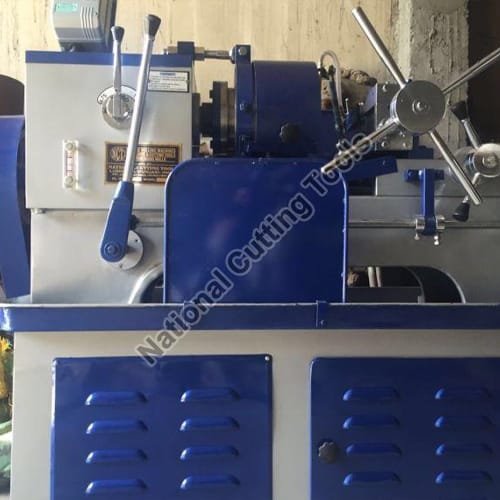
National Cutting Tools manufactures high-output automatic rebar thread rolling machines and rebar cold forging upsetting machines in Ludhiana. This guide outlines the engineering specifications necessary to achieve 100% bar-break tensile results on high-strength TMT rebar.
1. Rebar Threading Technology: Peeling & Cold Thread Rolling
Modern high-strength reinforcement bars (ASTM A615 Grade 60/75, BS 4449 Grade B500B, IS 1786 Fe 500D / Fe 550D) feature heavy transverse and longitudinal ribs. Attempting to cut threads directly onto ribbed rebar with single-point cutting tools or chasing taps removes vital parent metal, reducing the effective bar cross-sectional area and causing brittle tensile failure at the thread root under 80% to 90% of yield stress.
Our HGS-40 series utilizes a two-stage synchronized processing head:
- Rib Peeling Stage: Rotating carbide peeling inserts strip off the outer transverse ribs over a calibrated length (typically 40 mm to 90 mm), creating a true cylindrical bar surface matched exactly to the thread pitch diameter.
- Cold Thread Rolling Stage: Without re-clamping, the machine advances three hardened alloy steel thread-rolling wheels into the peeled section. The cold rolling process displaces metal plastically rather than cutting it, producing continuous grain flow, cold-work hardening the thread crests, and increasing surface hardness by 15% to 20%.
2. Cold Forging (Upsetting) for 100% Bar-Break Performance
For nuclear power plants, seismic Zone IV/V bridge foundations, and high-spec infrastructure, specifications require that under ultimate tensile loading, the failure must occur in the parent rebar body away from the joint, never at the threaded coupler connection.
In our rebar upsetting system:
- The rebar end is inserted into our hydraulic cold forging press, which clamps and axially upsets the bar end, increasing the cross-sectional area by 15% to 25%.
- When threads are rolled onto this enlarged upset end, the minor diameter of the thread remains equal to or larger than the original nominal rebar diameter.
- The mechanical connection achieves 125% to 130% of the rebar specified yield strength, ensuring failure occurs entirely in the rebar shank during laboratory pull-out testing.
3. International Standard Compliance Matrix
| Standard | Applicable Region | Specified Tensile Strength | Coupler Performance Requirement |
|---|---|---|---|
| ASTM A615 / A706 Grade 60 | USA, Saudi Arabia (Aramco), GCC | Min. 620 MPa (90 ksi) | Type 2 connection: 125% of rebar yield strength |
| BS 4449 Grade B500B | UK, UAE, Qatar, Singapore | Min. 540 MPa (Rm/Re ≥ 1.08) | Class B high-ductility seismic cyclic performance |
| IS 1786 Fe 500D / Fe 550D | India (CPWD, NHAI, Metro Rail) | Min. 565 – 600 MPa | IS 16172: Static tensile, slip test ≤ 0.1 mm, cyclic tension |
| ISO 15835-1 / 2 | International Harmonized Code | Grade-specific | Category S (seismic) & Category B (fatigue) tested |
4. Daily Production Output & Machine Setup
On continuous construction job sites and rebar fabrication yards, productivity per machine determines project scheduling:
- Cycle Time: Peeling and rolling a 25 mm or 32 mm rebar end requires approximately 25 to 35 seconds per end.
- Shift Output: A single operator comfortably threads 450 to 600 bar ends per 8-hour shift.
- Roller Tooling Life: Hardened Cr12MoV thread rolling rollers process between 10,000 and 15,000 rebar ends per set before requiring replacement, minimizing per-joint operating tooling cost.
5. Ordering Machine and Tooling Packages
Explore complete setups in our rebar processing machinery division. National Cutting Tools exports rebar threading machines, cold forging presses, rebar bending machines, and certified 45# carbon steel parallel-threaded couplers to construction contractors and steel rebar fabricators across the UAE, Saudi Arabia, Qatar, and Malaysia with full spare roller sets and gauge calibration plugs.
Machines covered in this guide
Senior Machine Tool Design & Production Engineering Division, Ludhiana Works
Authored by machine tool builders at our Ludhiana manufacturing works. Every technical parameter, metallurgy guideline, electrical formula, and production cycle stated in this guide is reviewed by our shop-floor engineers who assemble, wire, and execute material trials before global dispatch to GCC and domestic manufacturing facilities.
Need Engineering Consultation on This Subject?
Speak directly with National Cutting Tools senior machinery engineers.