
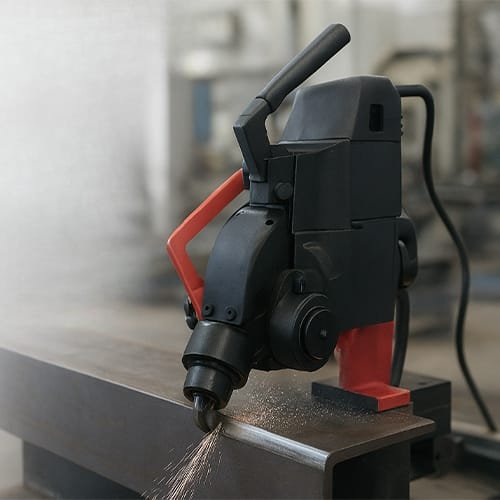
Complete guide on hydraulic rotary swaging versus separate welded spigots for scaffolding vertical standards. Analyzes wall thickness variations and concentricity tolerances.
Integral Spigot Forming vs Welded Spigot Pins
Vertical scaffolding standards must connect directly and securely end-to-end. Historically, fabricators welded a smaller 38mm sleeve inside the 48.3mm tube. However, modern high-production scaffolding yards use the Scaffolding Pipe Swaging Machine to form integral swaged ends directly from the parent tube, eliminating a separate welding operation and saving substantial labor.
Cold Reduction Parameters
| Design Parameter | Standard Tube | Swaged Spigot End |
|---|---|---|
| Outside Diameter (O.D.) | 48.3 mm | 38.0 mm (+0.0 / -0.4 mm) |
| Wall Thickness | 3.2 mm Initial | 3.6 - 3.8 mm (Thickened) |
| Reduction Length | N/A | 100 mm - 120 mm Insertion |
| Hydraulic Forming Cycle | Direct Axial Compression | 10 - 12 Seconds per tube |
Before swaging, ends must be square and deburred to prevent split seams. Review our Pipe End Facing Machine for facing and chamfering tooling.
Machines covered in this guide
Senior Machine Tool Design & Production Engineering Division, Ludhiana Works
Authored by machine tool builders at our Ludhiana manufacturing works. Every technical parameter, metallurgy guideline, electrical formula, and production cycle stated in this guide is reviewed by our shop-floor engineers who assemble, wire, and execute material trials before global dispatch to GCC and domestic manufacturing facilities.
Need Engineering Consultation on This Subject?
Speak directly with National Cutting Tools senior machinery engineers.