
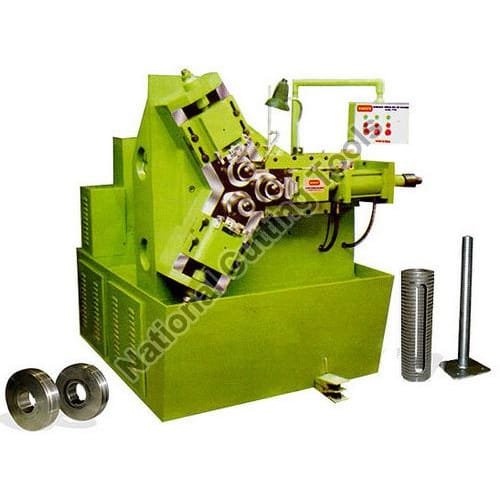
Testing standards for mechanical rebar splicing. Explains why cold-rolled parallel threads consistently achieve "Bar-Break" failure under universal tensile tests.
Mechanical Rebar Splicing Compliance
Civil engineering consultants across India, the Middle East, and Southeast Asia increasingly mandate mechanical couplers over traditional lap splicing to reduce steel congestion in heavily reinforced shear walls and columns. The Rebar Threading Machine produces parallel metric threads that satisfy international codes including ASTM A615, BS 8666, and ACI 318 Type 2.
Failure Mode Verification: Coupler vs Bar-Break
Under Universal Testing Machine (UTM) testing, a compliant mechanical splice must withstand 125% of the specified bar yield strength (Type 1) or reach the full ultimate tensile strength of the reinforcement bar without thread pull-out (Type 2 "Bar-Break").
| Test Criterion | ACI 318 / BS 8666 Threshold | NCT Machine Thread Output |
|---|---|---|
| Tensile Strength Ratio | Min 1.25 x Specified Yield | Consistently exceeds 1.35x Yield |
| Cyclic Slip Measurement | Max 0.10 mm residual slip | Under 0.04 mm recorded slip |
| Failure Location | Parent bar (minimum 50mm from coupler) | 100% Parent Bar Ductile Necking |
Review our specialized Two Roll Hydraulic Thread Rolling Machine for threading high-tensile anchor bars and bridge tendon rods.
Machines covered in this guide
Senior Machine Tool Design & Production Engineering Division, Ludhiana Works
Authored by machine tool builders at our Ludhiana manufacturing works. Every technical parameter, metallurgy guideline, electrical formula, and production cycle stated in this guide is reviewed by our shop-floor engineers who assemble, wire, and execute material trials before global dispatch to GCC and domestic manufacturing facilities.
Need Engineering Consultation on This Subject?
Speak directly with National Cutting Tools senior machinery engineers.