
What to verify before placing an order for rebar machinery in India: capacity in your bar size, electrical build, testing before dispatch, packing, documents and spares.
India is one of the main sources of rebar processing machinery, and Ludhiana in Punjab is one of its long-standing engineering clusters. Price is usually what brings a buyer to an Indian supplier; what decides whether the purchase was a good one is everything that happens after the quotation. This checklist is written from the dispatch side of that transaction.
1. Match the machine to your bar, not to the category
"Rebar threading machine" covers several different machines. Before comparing prices, fix these:
- Bar diameters you will run, smallest and largest.
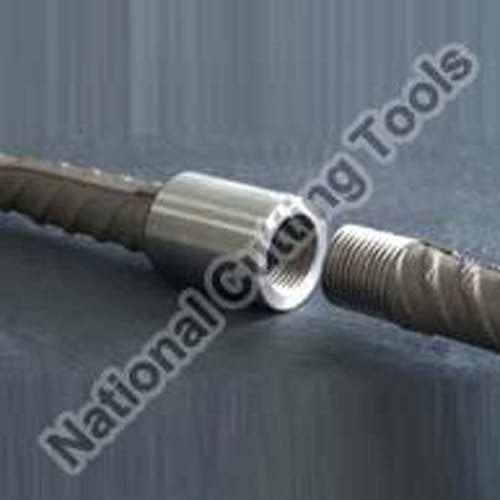
- The coupler system your project specifies: parallel thread with peeling, taper thread, or cold forged upset ends. Our guide to rebar threading and couplers sets out the difference.
- Thread length per end, which follows the coupler.
- Ends per shift, which decides whether one machine is enough.
A quotation that does not state the diameter range and thread form is not comparable with one that does.
2. Specify the electrical build at enquiry, not at dispatch
Motors, starters and control transformers are ordered to a supply. Tell the manufacturer the voltage, phases and frequency of the site the machine will run on. The markets we ship to most often are:
| Destination | Common supply |
|---|---|
| United Arab Emirates | 380–415 V, 3 phase, 50 Hz |
| Saudi Arabia | 380 V, 3 phase, 60 Hz |
| Qatar | 415 V, 3 phase, 50 Hz |
| Oman | 415 V, 3 phase, 50 Hz |
| Malaysia | 415 V, 3 phase, 50 Hz |
Frequency matters more than buyers expect: a motor wound for 50 Hz run on 60 Hz turns roughly 20 per cent faster, which changes cycle time, cutting speed and gearbox loading.
3. Ask for a run-off on your material
The single most useful thing you can require before payment is a trial run on material of your specification, recorded. Ask for:
- A video of the machine running your bar diameter and grade.
- Photographs of the finished thread, and a gauge check.
- The cycle time observed, not the catalogue figure.
Every machine we build is powered up and run on real material before it is crated, and buyers are welcome to ask for that recording. Our machine videos show what those run-offs look like.
4. Settle the commercial terms precisely
- Incoterm: EXW, FOB or CIF. Each moves the cost and the risk to a different point; CIF to your port is usually simplest for a first order.
- Port of discharge, since transit time and freight depend on it.
- Payment terms, and what triggers the balance: dispatch, bill of lading, or arrival.
- Delivery time counted from order confirmation and advance received, not from enquiry.
5. Packing and shipping
Machine tools travel badly when packed casually. Specify:
- Seaworthy packing, with the machine bolted to the base.
- Heat treated timber marked to ISPM-15 where wooden packing is used, which is a phytosanitary requirement for most import countries.
- Moisture protection for control panels and machined surfaces.
- Lifting points and centre of gravity marked on the crate.
Confirm the loaded dimensions and gross weight before booking, and whether the consignment fits a container or needs flat rack.
6. Documents you will need at the other end
- Commercial invoice and packing list.
- Bill of lading.
- Certificate of origin.
- Any inspection certificate agreed in the contract.
Check with your customs broker whether your country requires a pre-shipment inspection or a conformity certificate for machinery, since arranging it after shipment is expensive.
7. Spares, tooling and support
The consumables decide the running cost:
- Thread dies or cutters: cost each, expected life in ends, and lead time.
- Peeling blades where the system uses them.
- Hydraulic seals and filters, with part numbers.
- Electrical spares: contactors, overload relays, proximity switches.
Order a first set of spares with the machine. Air freighting a single seal kit later costs more than a full set shipped in the crate.
8. Verify the supplier, not just the price
- Ask for photographs of the machine being built, not stock images.
- Ask which markets they have shipped the same model to.
- Ask for the works address and check it is a works, not an office.
- Be wary of certification claims that cannot be evidenced with a certificate number and registrar. We publish only what we can evidence.
Frequently asked questions
How long does delivery take?
Build time depends on the machine and the order book, and sea transit adds roughly 4–12 days to GCC ports and longer to South East Asia. Ask for both figures separately so you can plan installation.
Can machines be built for 60 Hz supply?
Yes, if it is specified with the order. Retrofitting a motor after delivery is possible but rarely economic.
Do you supply the couplers as well as the machines?
Couplers and threading machines have to match in thread form and length. See rebar couplers and confirm the pairing at the quotation stage.
What if the machine needs service after installation?
Agree the support arrangement in writing before ordering: what is covered, for how long, and how a spare is despatched. Most issues in the first year are electrical components and hydraulic seals, which is why the spares list matters.
Send your bar sizes, the coupler system specified, output per shift and the port you import through, and our Ludhiana works will quote the machine with the electrical build for your supply. Browse rebar machinery or send your requirement.
Machines covered in this guide
Senior Machine Tool Design & Production Engineering Division, Ludhiana Works
Authored by machine tool builders at our Ludhiana manufacturing works. Every technical parameter, metallurgy guideline, electrical formula, and production cycle stated in this guide is reviewed by our shop-floor engineers who assemble, wire, and execute material trials before global dispatch to GCC and domestic manufacturing facilities.
Need Engineering Consultation on This Subject?
Speak directly with National Cutting Tools senior machinery engineers.