
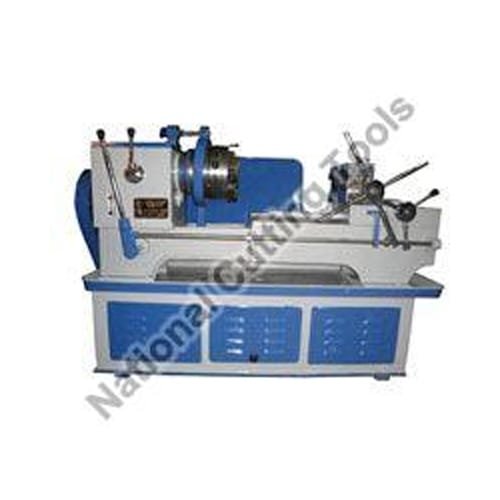
Parallel thread, taper thread and cold forged upset ends explained, with the machines each system needs and the checks that keep a mechanical splice acceptable on site.
Mechanical splices join reinforcement bar end to end with a threaded coupler instead of a lapped overlap. They save steel, remove congestion at the joint and make precast connections practical. All of them start with a threaded bar end, and the way that thread is produced decides which machines you need.
The three coupler systems
Parallel thread with rib peeling
The ribs are first peeled off to leave a clean cylindrical section, then a parallel thread is cut or rolled onto it. Because the thread is parallel, the coupler engages along its whole length and the joint can develop the bar's strength.
- Strongest and most widely specified system.
- Needs a peeling and threading machine; the peeled diameter must be controlled closely.
- Thread ends are interchangeable between bars, which suits large sites.
Taper thread
A tapered thread is cut directly onto the bar end. The taper pulls up tight as it is screwed in.
- Fewer operations and less equipment, so a lower cost per joint.
- Tightening torque matters: under-tightened taper joints slip.
- Thread gauging is critical, because the taper hides small errors until load is applied.
Cold forged (upset) parallel thread
The bar end is upset — thickened by cold forging — before the thread is cut. Because the thread is formed in enlarged material, the threaded section is never weaker than the parent bar.
- Best where the joint must be as strong as the bar, and where fatigue loading applies.
- Needs a rebar cold forging machine in addition to the threading machine.
- An extra operation per bar end, so it costs more per joint.
Which machines a coupler line needs
| Stage | Machine | Sets |
|---|---|---|
| Cut to length | Bar cutting machine or saw | Square ends; a skewed cut threads badly |
| Upsetting (optional) | Rebar cold forging machine | Enlarged end diameter and length |
| Peeling and threading | Rebar threading machine | Thread size, pitch and length |
| Thread cutting variants | Rebar thread cutting machine | Taper or parallel form |
| Coupler supply | Rebar couplers | Matching thread form and length |
Specifying a rebar threading machine
Five figures decide the machine:
- Bar diameter range — typically from 12 mm up to 40 mm or more. Include the largest bar you expect on future projects.
- Thread length per end, which follows the coupler length.
- Cycle time per end, which together with bar handling sets ends per shift.
- Thread form: parallel or taper, and the pitch.
- Supply voltage and frequency for the motor and controls.
Ask how the bar is clamped. Clamping that marks or ovalises the bar causes thread runout, and runout is what makes a coupler feel tight at the start and loose at depth.
Standards and acceptance
Mechanical splices for reinforcement are covered internationally by ISO 15835, and most project specifications reference it or an equivalent national standard along with a tensile test requirement on assembled joints. What that means in practice on a production line:
- Test assemblies are pulled to destruction at a stated frequency, and results recorded against bar heat numbers.
- Thread gauging with go/no-go gauges after every die or cutter change.
- Torque values recorded where the system specifies tightening torque.
- Traceability from coupler batch to the joint on the drawing.
Ask your project engineer which standard and test frequency applies before buying, because it affects whether you need an upset system or a peeled parallel thread.
Common production faults, and their causes
| Symptom | Usual cause |
|---|---|
| Coupler starts then binds | Thread runout from poor clamping, or a bent bar end |
| Thread crest torn | Blunt cutter, or peeled diameter oversize |
| Joint slips under test | Under-tightened taper thread, or insufficient thread engagement |
| Short thread length | Stop setting drifted; check first piece each shift |
| Break at the first thread | Thread cut into the parent section without upsetting where the design assumed it |
Output planning
Ends per shift, not machines, is what a contractor buys. A realistic estimate needs the cycle time per end, the bar handling method, and the changeover time between diameters. On a site producing several bar sizes a day, changeover can cost more time than cutting. Where one diameter dominates, a dedicated setup pays back quickly.
Frequently asked questions
Are couplers stronger than lapped joints?
A correctly specified mechanical splice develops the bar's strength without relying on the concrete to transfer load, which a lap does. It also removes congestion, which matters in heavily reinforced sections.
Parallel or taper thread?
Parallel threads with peeling are the usual specification for structural work and are interchangeable on site. Taper threads cost less per joint and suit simpler applications where the specification permits them.
Do I need a cold forging machine?
Only for upset parallel threads, where the threaded section must not be weaker than the bar. Peeled parallel threads on the plain bar section are acceptable for many specifications; the project engineer decides.
What bar diameters can be threaded?
Machines are supplied for ranges that commonly run from 12 mm to 40 mm and above. Specify the largest and the smallest you will run, since clamping arrangements are range dependent.
Send the bar diameters, the coupler system specified on the project and your output per shift, and our Ludhiana works will quote the line for it. Browse the rebar machinery range or send your project specification.
Machines covered in this guide
Senior Machine Tool Design & Production Engineering Division, Ludhiana Works
Authored by machine tool builders at our Ludhiana manufacturing works. Every technical parameter, metallurgy guideline, electrical formula, and production cycle stated in this guide is reviewed by our shop-floor engineers who assemble, wire, and execute material trials before global dispatch to GCC and domestic manufacturing facilities.
Need Engineering Consultation on This Subject?
Speak directly with National Cutting Tools senior machinery engineers.