
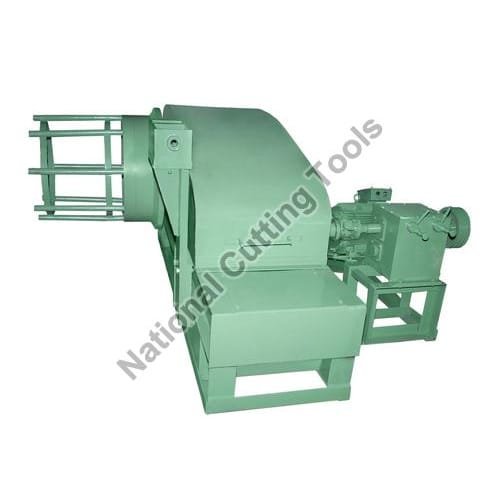
A thread bar line draws, points, straightens, cuts and rolls the thread. Here is what each machine does, why rolled threads outlast cut ones, and how to size the line for your output.
Thread bar — tie rods, jack screws, anchor bolts, formwork ties — is made on a short line of machines that each do one job well. Buyers often price the thread rolling machine alone and then discover that the bar going into it is not straight enough, or not the right diameter, to roll a clean thread. This guide walks the line in order and explains what each stage decides.
The line, stage by stage
1. Wire drawing
Drawing pulls hot rolled wire rod through a die to reduce it to the diameter you need and improve its surface and straightness. Two things come out of this stage that matter downstream: a controlled diameter, and work hardening that raises tensile strength. If you buy bar already at size, you skip this stage; if you buy rod at a lower price, a wire drawing machine is what converts the saving into usable stock.
The diameter it produces is not the finished thread diameter. For a rolled thread the blank sits between the thread's major and minor diameter, near the pitch diameter, because rolling displaces material outwards rather than cutting it away. Get this figure wrong by a few tenths and the thread comes out oversized, undersized or with a torn crest.
2. Pointing
A wire pointing machine reduces and tapers the bar end so it can be entered into the drawing die or the rolling head. On a thread line it also chamfers the end, which stops the first thread from being damaged and helps a nut start cleanly.
3. Straightening and cutting
Coil stock has to be straightened before it can be threaded or welded. A straightening and cutting machine passes the bar through a series of rollers set in two planes, then cuts it to length. Two figures decide whether the machine suits you: the diameter range, and the cut length tolerance. For tie rods, length tolerance directly affects how the assembled formwork sits, so it is worth specifying rather than accepting a default.
Where the same line also feeds a cut-off operation for other products, a straightening cum cutting off machine combines both into one pass.
4. Thread rolling
Thread rolling forms the thread by pressing hardened dies into the rotating blank. No metal is removed. The two common arrangements are:
- Two roll — the blank is supported on a work rest between two driven rolls. Simple, robust, and the usual choice for tie rods and long bar. See the two roll hydraulic thread rolling machine.
- Three roll — three rolls surround the blank, which self-centres without a work rest. Better for thin or hollow sections and for holding concentricity. See the three roll machine.
Why rolled threads outlast cut threads
A cut thread is machined into the bar: the grain of the steel is severed at every thread root, and the root is where fatigue cracks start. A rolled thread displaces the grain so that it follows the thread form, and it leaves the root surface in compression. In practice that produces:
- Higher fatigue life, which matters on anything that is loaded and unloaded repeatedly, such as formwork ties and jack screws.
- A harder, burnished surface that resists galling when a nut is run up and down repeatedly.
- No chips, no cutting fluid to dispose of, and a faster cycle per piece.
The trade-off is tooling. Rolling dies are made for one thread form and pitch, and they are a consumable. Costing a line without budgeting for spare dies is a common mistake.
Sizing the line for your output
Work backwards from the finished pieces you need per shift:
| Decision | What it depends on |
|---|---|
| Bar diameter range | The smallest and largest product you intend to make, including any future size. |
| Thread length per piece | Sets rolling time; a full-length threaded rod takes far longer than a 75 mm end thread. |
| Cut length and tolerance | Straightening and cutting machine capacity, and whether a stop gauge or encoder is needed. |
| Material grade | Higher tensile bar needs more rolling force and shortens die life. |
| Supply voltage and frequency | Motor and switchgear build: 380–415 V, 50 or 60 Hz for most export markets. |
If one stage is slower than the rest, it sets the rate of the whole line. It is usually cheaper to buy the bottleneck machine one size larger than to buy a second line later.
What thread bar machinery is used for
- Formwork tie rods — rolled thread along the full length, used with wing nuts and water stops.
- Jack screws and base jacks — coarse rolled threads on scaffolding props and adjustable bases, produced alongside scaffolding machinery.
- Anchor and foundation bolts — end threads on straight or bent bar, often to a drawing.
- Rebar couplers — parallel threads on reinforcement bar, covered in our guide to the rebar threading machine.
Quality checks worth running
- Go/no-go ring gauge on the first and last piece of every batch, and after any die change.
- Thread crest condition: tearing usually means the blank is oversized or the die is worn.
- Straightness over the finished length, checked on a surface plate, not by eye.
- Nut run-down by hand along the whole thread, which finds pitch drift a gauge can miss.
Frequently asked questions
Can one machine roll several thread sizes?
Yes, within its diameter and force range. Each size and pitch needs its own die set, and changeover time is worth asking about if you run short batches.
What blank diameter do I need for an M20 rolled thread?
The blank sits close to the pitch diameter, so it is smaller than the nominal size, not equal to it. The exact figure depends on the thread form and material; a supplier should provide the blank size along with the dies.
Do I need drawing if I buy bright bar?
No. Drawing exists to convert cheaper hot rolled rod into accurate stock. If you already buy bar at the right diameter and finish, the line starts at straightening or pointing.
Hydraulic or mechanical thread rolling?
Hydraulic infeed gives controlled, repeatable pressure and is easier on dies, which is why most thread bar work is done on hydraulic machines.
Send the bar diameter range, thread form and pitch, the finished length and your output per shift, and our Ludhiana works will quote the stages you actually need. Browse the thread bar machinery range or ask the engineering desk.
Machines covered in this guide
Senior Machine Tool Design & Production Engineering Division, Ludhiana Works
Authored by machine tool builders at our Ludhiana manufacturing works. Every technical parameter, metallurgy guideline, electrical formula, and production cycle stated in this guide is reviewed by our shop-floor engineers who assemble, wire, and execute material trials before global dispatch to GCC and domestic manufacturing facilities.
Need Engineering Consultation on This Subject?
Speak directly with National Cutting Tools senior machinery engineers.